The intelligence layer for AI filmmaking.
Cinema Brain understands the production, translates human creative intent into cinematic decisions, orchestrates the right AI models, preserves continuity and remembers how the film was made.
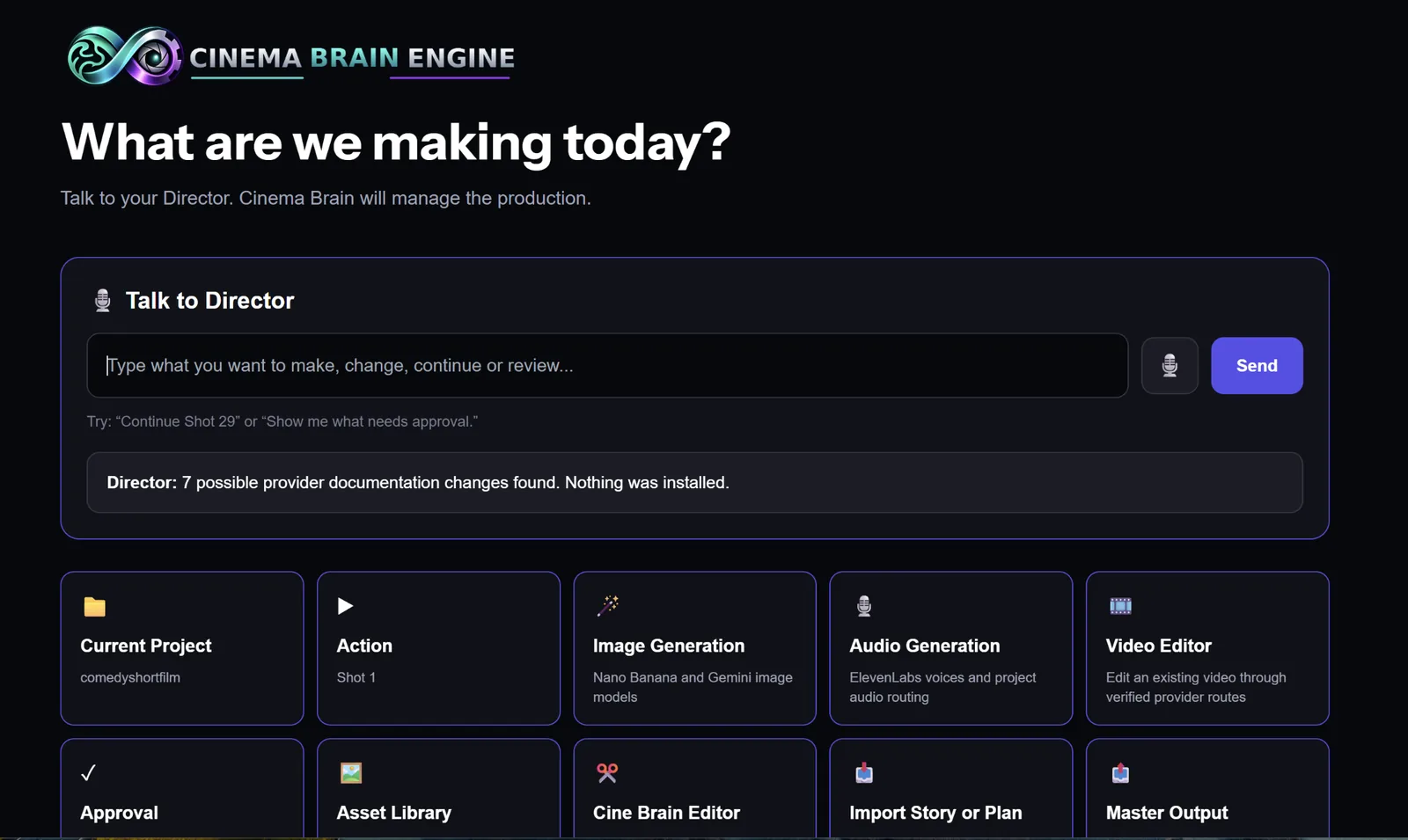
AI can generate a shot.
It still can’t manage a film.
Filmmakers now jump between writing tools, image generators, video models, voice systems, editors, folders and spreadsheets. Generation got easier. Production got fragmented.
Context resets
Characters, locations, wardrobe, scene logic and creative intent drift across disconnected tools.
Model burden
Creators are expected to understand changing model rules, controls, strengths, weaknesses and prices.
Iteration waste
The wrong model, prompt or reference setup burns time and generation spend before the shot is usable.
Decisions disappear
Why a take was approved, rejected or changed is usually trapped in chats, memory or scattered notes.
Continuity breaks
A film is a chain of dependent decisions. Most AI tools treat every generation as an isolated request.
Provenance is missing
Finished assets often become detached from the prompt, source images, provider, version and rights history that created them.
Speak like a director — or like a normal person.
You shouldn’t need to know lens jargon, blocking terminology or which model accepts which references. Describe the intention. Cinema Brain translates it into production logic.
“Make this feel tense. Stay close to her face. Let the music slowly become unsettling.”The filmmaker expresses intent. Cinema Brain structures the cinematic execution.
One production brain.
From intention to approved shot.
Cinema Brain carries context forward. The shot is not a blank prompt — it is part of a project with memory.
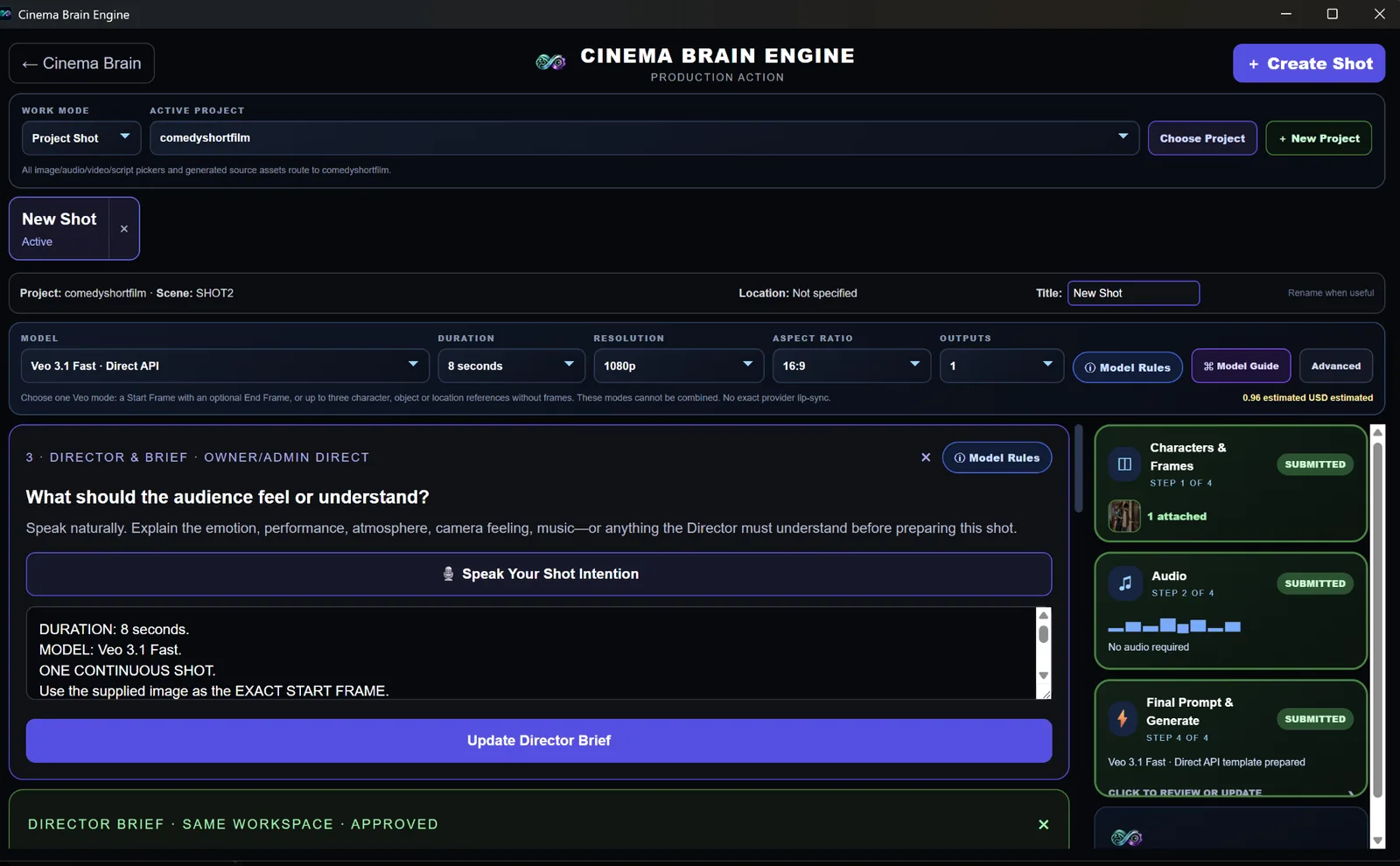
Tell the system what the audience should feel or understand.
The Director & Brief layer turns human intention into structured cinematic guidance while keeping a professional director free to override every decision.
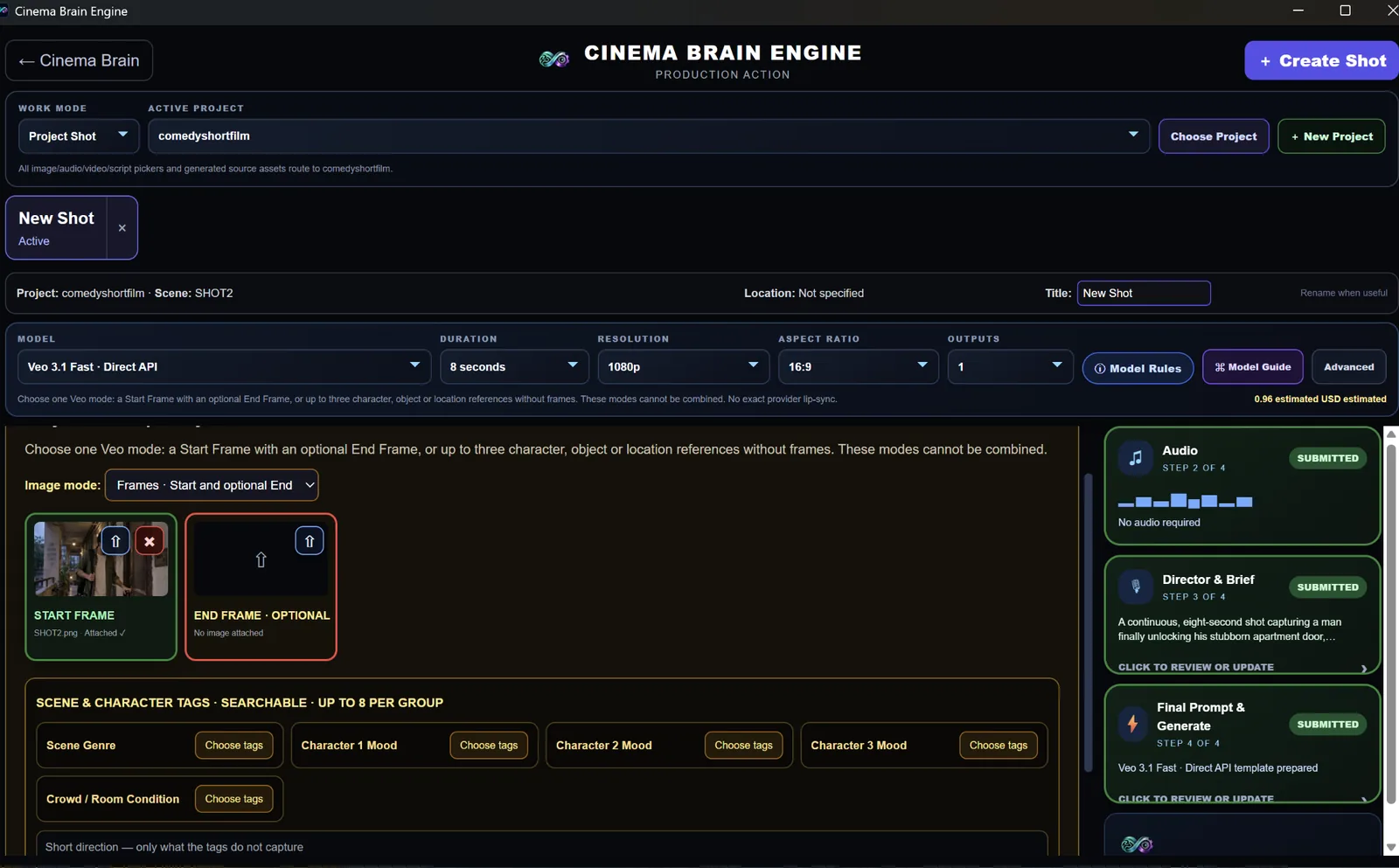
The interface understands the rules of the selected model.
Frames, references, duration, aspect ratio, audio capability and provider constraints change according to the execution route — before generation begins.
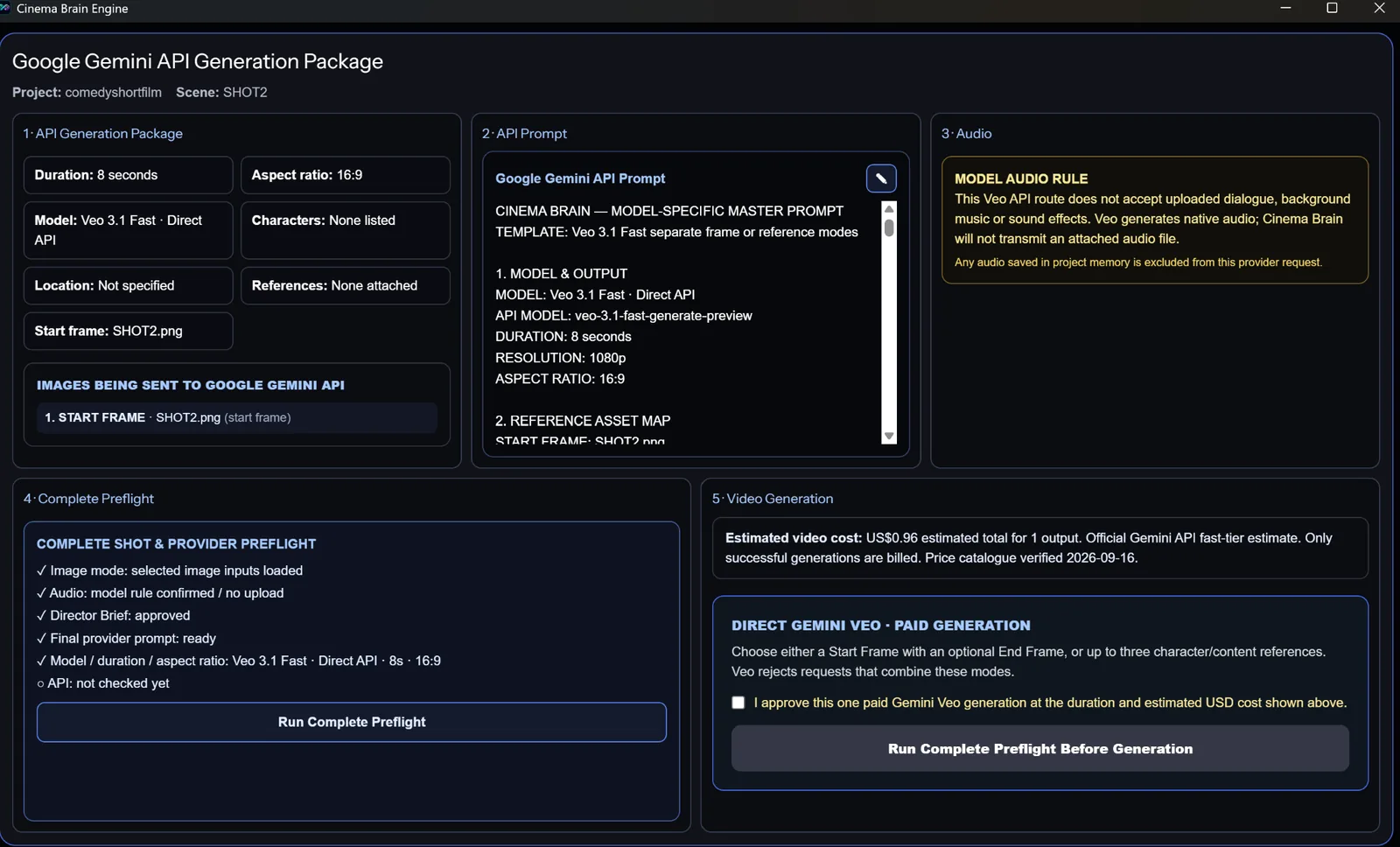
Know what is being sent, what it costs and whether it is valid.
Production preflight verifies the shot package, provider rules, prompt, reference map and estimated spend before a paid generation is approved.
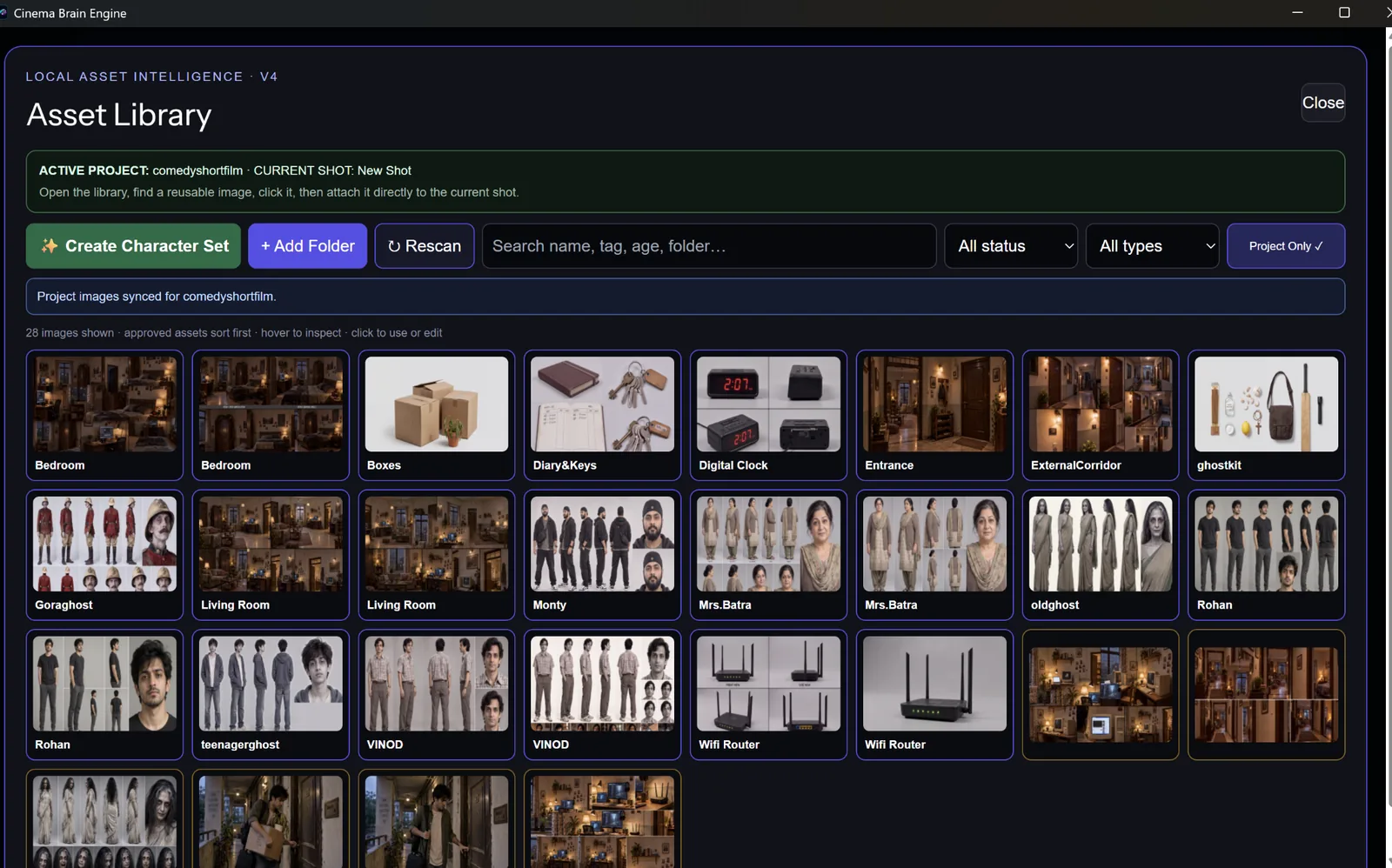
Characters, locations and reusable assets stay inside the production.
Approved visual assets remain searchable and attachable to future shots, supporting consistency instead of forcing the creator to rebuild context every time.
The asset isn’t the clip.
The asset is the production intelligence.
Every project can generate structured knowledge about what was attempted, what was approved, what failed, which model performed, what it cost and how the final asset was created.
Every asset should know where it came from.
Cinema Brain is being designed to create the evidence trail at the same time it creates the movie — not after a dispute appears.
Better models make Cinema Brain better.
Cinema Brain is not trying to replace every image, video, voice or music model. It is building the intelligence layer that can choose, configure and coordinate the best execution path as the model ecosystem evolves.
Model-aware inputs
Use the controls a provider actually supports instead of forcing a one-size-fits-all interface.
Provider preflight
Catch unsupported combinations before money is spent and the generation fails.
Cost / performance learning
Optimize for the cost of an approved cinematic result — not merely the advertised cost of one generation.
Built for the new generation of filmmakers.
Every AI model will get better.
Filmmaking will still need a brain.
Cinema Brain is building the persistent intelligence layer between human creative intent and generative execution.